Belden explains: How TSB-184-A supports Power over Ethernet
In a post to the Belden Blog, the company’s manager of LAN technology and applications, Ron Tellas, boils down the recently completed Telecommunications Systems Bulletin TSB-184-A Guidelines for Supporting Power Delivery Over Balanced Twisted-Pair Cabling.
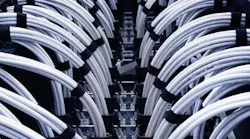
In the post, Tellas reminds us that in Power over Ethernet applications, “a small percentage of the power being carried over the cable is dissipated as heat inside the cabling.” He further explains, “Putting cables into bundles can heighten this temperature rise. Cable temperature rise can push cables past their rated temperatures, reducing performance and reliability (and possibly damaging the cable). Controlling temperature rise will decrease potential cable problems and network performance issues.”
The specifications in TSB-184-A are intended to do exactly that—control temperature rise and thereby decrease potential problems. Tellas points out that TSB-184-A is a set of guidelines, which are intended to be used in addition to ANSI/TIA-568 infrastructure requirements.
TSB-184-A “supports power delivery using all four pairs, with up to 1000 mA per pair for a maximum power of 100W,” Tellas points out. He then identifies the following specific recommendations from the TSB.
- Leaving cables unbundled to facilitate better heat dissipation—if not possible, small bundles are recommended
- Limiting the number of cables per bundle to 24 to reduce potential temperature rise caused by installation factors, high ambient temperature, 26-AWG cables and higher currents
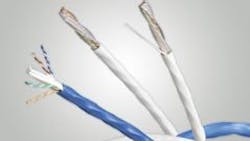
- Using Category 6A or higher-performing 4-pair balanced twisted-pair cabling for new PoE installation
Tellas also states, “As power demands for IP-enabled devices grow, so will the demands placed on your cable, and your network. The current PoE standard, IEEE 802.3at, allows for 30W of power at the source. The proposed standard, IEEE 802.3bt, allows nearly 100W of power at the source. It is expected to become a standard in 2018.”