Heavy-duty dual-polarized MIMO flat panel antennas for outdoor use
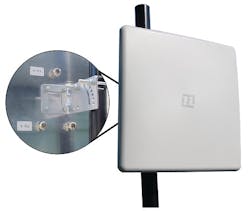
L-com has released five new HyperLink brand flat panel antennas that are dual polarized. The antennas have between 12 and 19 dBi gain, and include models for the 2.4 GHz, 2.4/5.8 GHz, 3.5 GHz and 4.9-5.8 GHz bands. All are designed for heavy-duty outdoor use and come with mounting hardware, and support multiple-in/multiple-out (MIMO) formats with two or three active elements.
The company notes that flat panel antennas are popular for their high gain and focused beam width for providing wireless connectivity in long, rectangular areas. Dual polarization means that the antennas send/receive using both vertically and horizontally polarized beams at the same time, allowing for multi-thread communication in MIMO/802.11n applications.
The new antennas are priced affordably for both individual and large-scale installations, contends L-com. "With the newer, faster wireless connectivity standards demanding multi-thread communication, MIMO antennas are more popular than ever," comments Patrick Pesa, director of product management for L-com. "We've had a selection of MIMO antennas for a long time, but we decided to expand our offering to help serve our customers."
The new antennas are due to be stocked in L-com's HyperLink distribution center in Boca Raton, FL, for quick turnaround on orders.
Related story:Researcher sees 802.11ac dominating WLANs by 2014