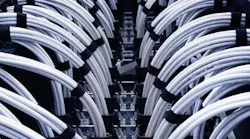
Book takes a deep look at the cabling behind the Internet
A new book by journalist Andrew Blum takes an anecodtal, and by some accounts often humorous, look at the cabling, unknown to most of the world, behind the Internet as everyone knows it. According to a description of the book Tubes: A Journey to the Center of the Internet, Blum was motivated to write the book in part because of the day in 2009 when a squirrel chewed through a cable in his backyard and brought his broadband connection to crawl.
Blum's journey to discover what makes the Internet work took him to several parts of the world and ended up boiling down to cabling. He focuses primarily on fiber-optic cabling in the book.
In a review of the book, New Statesman's Helen Lewis divulges what must be some of Blum's more interesting stories, including his unsuccessful attempt to get inside one of Google's data centers in Oregon ("The people who want to make all information easily accessible are not so keen on their own secrets being brought out into the light," Lewis notes) as well as the suggestion that an Arpanet facility was the setting for a photo shoot featuring an adult-entertainment superstar.
Lewis remarks, "It is only a little unkind to say that most of what Blum discovers is cables. He sees cables that join to other cables in vast racks, making the U.S. Internet fractions of a second faster than it would otherwise be. He sees cables being joined together, ready to go under the sea. He sees cables packed into hoses under the streets of New York."
The book is available in hardcover through Amazon here. The Kindle version, available here, has the slightly different title Tubes: Behind the Scenes at the Internet.