Building-to-Building Connectivity in Campus Environments: Technologies, Standards, and Next-Generation Approaches
Campus environments present unique challenges and opportunities for network cabling designers, installers, and end-users. Unlike traditional single-building offices, campuses require robust outside plant (OSP) infrastructures that interconnect multiple buildings, facilitate high-capacity connectivity, and support evolving digital applications ranging from WiFi to IoT sensors and real-time video surveillance.
In these environments, the right solutions help ensure performance, scalability, reliability, and safety for the network and its users.
This article explores the foundational elements of campus networks, current and emerging technologies for linking buildings, influential standards and guidelines, traditional and alternative media options, and advances in data and power delivery that transform how networks are designed and deployed.
Examining Campus Network Connectivity
A campus network refers to the system of network infrastructure that connects multiple buildings within a defined geographic area, often owned and operated by a single organization. Typical examples include corporate campuses, universities, hospitals with multiple buildings, industrial parks, and government complexes including military bases.
Unlike isolated single-building networks, campuses require outside plant (OSP) infrastructure, comprising cable, connectivity, conveyance and management hardware along with protective housing equipment that traverse between buildings, sometimes over long distances, exposed to the elements.
Standards and Guidelines
Standards provide specifications and a framework for the design and installation of communications networks. For campus environments, several established standards shape how outside plant and structured cabling systems should be planned.
ANSI/TIA-758-C: Perhaps the most crucial standard for campus deployments is ANSI/TIA-758-C: Customer-Owned Outside Plant Telecommunications Infrastructure. This document defines the requirements and recommendations for cabling installed between buildings (or distant points) in a customer-owned campus environment. These guidelines cover:
- Pathways and spaces for cabling
- Cable types and performance specifications
- Bonding, grounding, and protection measures
- Environmental considerations (e.g., underground, aerial, wet conditions)
Customer-owned outside plant designs must align with TIA-758-C to ensure longevity, serviceability, and compliance. As campus lifecycles typically span decades, careful adherence minimizes costly upgrades and supports evolving technologies.
In addition to TIA-758-C, several companion standards guide campus and structured cabling design:
ANSI/TIA-568 series: Defines structured cabling components and performance requirements for balanced copper and fiber systems.
ANSI/TIA-569: Addresses pathways and spaces within buildings. The standard is currently in its “E” revision.
IEEE cabling and networking standards: Offer definitions for Ethernet, PoE, and wireless networking technologies.
Together, these standards establish the rules for designing structured cabling that is interoperable, scalable, and capable of supporting multiple media types.
Media Options: Fiber, Copper, Wireless
At the heart of building-to-building connectivity lies the choice of physical media. Fiber-optic cabling is the most common option, and copper cabling continues to fill some needs in these environments. Additionally, some wireless technologies fill the need when a physical connection via cable is impossible or impractical.
Singlemode and multimode fiber remain the most common campus-backbone media thanks to their distance and bandwidth capabilities. As a general rule, multimode fiber fulfills connectivity needs at optimal system costs when the distance is a few hundred meters or shorter. Singlemode typically is required for distances longer than a few hundred meters, and sometimes is chosen even for those relatively shorter distances thanks to its distance, bandwidth, and attenuation superiority. As the volume of singlemode transceivers continues to increase, the system cost premium continues to drop, often justifying the deployment of singlemode media alongside multimode for future proofing.
Twisted-pair copper cabling has been the workhorse of in-building Ethernet networks. In a campus setting, copper can be deployed for shorter runs of 100 meters or less. If copper cabling is going to be used for a building-to-building connection, the cable itself and/or the pathway in which it is housed must be rated for outdoor use.
Traditional copper cabling is economical and supports Power over Ethernet (PoE), which allows data and direct current (DC) electrical power to be delivered over the same cable. Officially, TIA standards limit copper-based channels to a 100-meter maximum distance but several vendors guarantee longer lengths for certain outside plant applications, such as outdoor PoE-enabled security cameras.
Wireless systems, including campus WiFi and cellular technologies (including 5G and private LTE), offer an alternative to physical cabling between buildings. One such technology is point-to-point wireless backhaul, in which line-of-sight links can bridge buildings. These systems often use millimeter-wave bands and have gained popularity when the physical terrain of a campus makes cabled/wired connections impractical.
Another wireless option is the distributed antenna system (DAS), which can provide comprehensive coverage across campus buildings and grounds. On-campus DAS networks are an example of the expression “Wireless, isn’t,” (meaning it isn’t truly without wires), because supporting each DAS antenna is a fiber-optic or high-performance copper cabling circuit.
Free space optics is a point-to-point wireless optical communication method that uses lasers to transmit data through the air. Free space optics can deliver fiber-like performance without cabling, though its effectiveness can be influenced by weather conditions.
Overall, wireless connectivity can reduce civil installation costs and increase agility, especially when buildings are not easily accessible. Nonetheless, these systems typically are paired with fiber or copper backhaul to transport traffic back to centralized network infrastructure.
Integrating Multiple Media: Hybrid and Composite Cable Solutions
Beyond the basic media categories, modern campus networks are exploring hybrid and composite cabling solutions that combine multiple functionalities in one cable.
Composite cables embed both optical fibers and copper conductors within a single outer jacket. This design enables data transmission via fiber and power delivery via copper conductors.
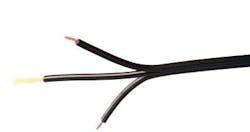
A common use for composite cable is to connect remote devices such as cameras, wireless access points, and IoT sensors in locations where dedicated power lines are inconvenient or costly. These cables can help overcome traditional distance limitations of PoE by enabling centralized power delivery over hybrid paths.
A growing trend among infrastructure designers, installers, and users is to deploy hybrid powered fiber cable systems. These combine high-performance optical fibers for data with copper conductors that deliver low-voltage DC power from a central source.
This type of infrastructure enables the delivery of low-voltage power and fiber-optic connectivity through a single cable, extending both data and power across longer distances without separate infrastructure. These systems can support remote devices such as small cells, emergency phones, digital signage, and outdoor access points, with centralized uninterruptible power supply (UPS) backup for resilience.
Data and Power Delivery Over Long Distances
A major shift in campus network design is the integration of power delivery over data infrastructure. Traditional Power over Ethernet (PoE) allows power and data on the same copper cable but is limited to relatively short distances and moderate power levels.
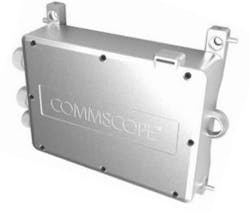
Newer solutions like CommScope’s FiberREACH™ extend the concept of PoE by integrating centralized power with fiber connectivity. A system like this one can accomplish the following in a campus environment.
- Deliver power and data over hybrid fiber cabling
- Support emerging edge devices across wide campus footprints
- Simplify installation by reducing separate power runs
- Support higher power requirements and distances than traditional PoE
This approach is particularly useful in campus environments where distributed endpoints are far from power sources.
Fault managed power (FMP) refers to systems designed to distribute power intelligently and safely across the network, isolating faults, monitoring consumption, and protecting both network equipment and powered devices.
When combined with hybrid cabling, fault-managed power enables centralized power management, protection against overcurrent events, and scalable delivery of higher wattages to end devices.
FMP technologies and systems illustrate how modern campus networks are evolving to treat power distribution as an intrinsic part of the telecommunications infrastructure, as opposed to an entirely separate building system.
FMP represents a significant evolution in how electrical energy is distributed, monitored, and controlled across large facilities like campuses. Unlike traditional alternating current (AC) systems that rely on fixed conduit, separate power wiring, and centralized panels, FMP delivers power in digitally controlled packets that are inherently safe, intelligent, and flexible. If a fault or abnormal condition such as a short or unintended contact is detected, the system immediately limits or halts delivery to protect people and equipment.
In a campus environment, these capabilities translate into more efficient deployment of power and data across buildings, outdoor locations, and remote facilities. Because FMP infrastructure can carry significant power over long distances on lightweight cabling and coexist with fiber or communication pathways, it streamlines deployments that would otherwise require extensive conventional electrical work. For example, instead of trenching new conduits and expanding traditional feeders to remote buildings, an FMP system can deliver remote power over the same pathway through which data travels, reducing material, labor, and permitting complications.
Designing for Performance, Resiliency, and the Future
When building a campus network that connects multiple buildings, planners must consider several key design principles.
Redundancy and Mesh Topologies: Redundant paths between core nodes help maintain service during failures or maintenance. While star topologies simplify installation, partial rings or meshed fiber backbones enhance resiliency and uptime.
Pathways and Physical Security: Proper conduit, duct, handholes, vaults, and securing techniques safeguard cables against environmental damage, flooding, and unauthorized access. Using standardized pathways per TIA recommendations ensures the cabling can be maintained and upgraded efficiently.
Scalability: The pace of innovation means campus networks must accommodate future growth. Designers should plan for higher bandwidth than the network currently requires, along with increased device densities and corresponding increases in those devices’ power consumption.
Standards compliance, modular architecture, and intelligent infrastructure management systems help future-proof these networks.
Building-to-building connectivity in campus environments is a multifaceted domain involving standards, media choices, and power delivery considerations. Fiber optics continues to be the dominant choice for high-capacity backbones, while copper, hybrid, and wireless solutions extend connectivity to distributed endpoints.
Emerging techniques such as hybrid fiber-powered cabling and FMP delivery transform how networks distribute both data and energy, enabling campus networks to support high-performance applications without conventional power infrastructure constraints.
Ultimately, effective campus network design balances performance, cost, scalability, and operational simplicity, ensuring that organizations are ready not just for today’s demands, but tomorrow’s innovations.
About the Author
 Patrick McLaughlin
Patrick McLaughlin
Chief Editor
Patrick McLaughlin, content director for Cabling Installation & Maintenance and Endeavor B2B's Digital Infrastructure Group, has covered the cabling industry since the 1990s. He has authored hundreds of articles on technical and business topics related to the specification, design, installation, and management of information communications technology systems. McLaughlin has presented at live in-person and online events, has directed cablinginstall.com's webinar programs for 20 years, and administers the annual Cabling Innovators Awards.