Ground bonding kits for protecting data center network equipment
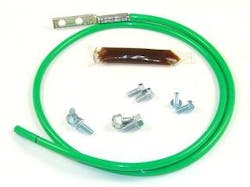
PDU Cables has introduced a line of ground bonding kits to “increase reliability and efficiency of data center electrical equipment,” the company says. The kits include custom lengths and multiple lug options.
“Lightning strikes 40 to 50 times a second, nearly 1.4 billion times a year,” the company explained when announcing the new product line. “According to insurance industry data, improper grounding of communication systems leads to $500 million per year of damage to property and/or equipment due to lighting.”
The company further stated that while minimum grounding requirements are designed for personnel safety and fire-prevention purposes, according to the IEEE, the typical alternating-current third-prong ground is almost never sufficient to prevent damage to network equipment. TIA-942 best practices, PDU Cables added, require each rack to bond directly to the grounding grid or common bonding network, directing current away from sensitive electronics.
“The purpose of a grounding system is to create a low-impedance path to earth ground for electrical surges and transient voltages,” PDU Cables said. “Lightning, fault currents, circuit switching and electrostatic discharge are common causes of surges in transient voltage. An effective grounding system minimizes the detrimental effects of these electrical surges, which include degraded network performance and reliability and increased safety risk.”