Data logger charts lighting use
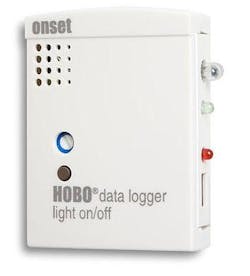
The HOBO U9 Light On/OFF Data Logger from Onset records up to 43,000 on/off changes in a facility's lighting system. It can be used by data center managers as part of a lighting-efficiency strategy, and works along with Onset’s HOBOware software package to deliver lighting statistics.
“The light threshold is adjustable from 10 to 100 lumens/square meter,” the company says on the product’s web page. It adds that the Data Logger “monitors light on and off conditions and includes a user-adjustable sensitivity control,” and also “includes a mounting kit with magnet, hook and bop tape.”
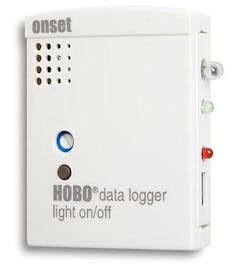
The logger was mentioned in a white paper that CommScope recently authored on data center lighting efficiency. In that paper, CommScope noted that many data center administrators “operate under imprecise assumptions of how long the lights are on in their data centers. However, since they’re not there to monitor the lights all the time, these assumptions can be quite inaccurate. Fortunately, there is an inexpensive tool to determine exactly how much lighting energy is used in their data center … the HOBO U9 Light On/Off Data Logger. By placing the HOBO in the data center an operator can track precisely how much lighting is used over a period of time. This empirical information can be used to guide data center operators to select the approach that works best for them.”