Four Cabling Considerations for Modular Data Centers
Key Highlights
- Prioritize offsite cable procurement and pre-kitting to reduce onsite labor and accelerate deployment timelines.
- Right-size your labor force by assessing skill levels and planning detailed cable preparation to ensure precision and efficiency.
- Maintain high product quality standards for connections to ensure long-term reliability, especially in high-density AI environments.
- Treat modular data centers as repeatable products with predefined configurations to streamline installation and testing processes.
- Focus on structured cabling strategies as critical enablers of speed, reliability, and scalability in modular deployments.

As organizations’ demands continue to grow for more compute power and AI applications, many are getting creative in how they address these needs. Some are building data centers in remote locations, while others are looking to incorporate them within pre-existing facilities or tight urban spaces. As a result, modular data centers have emerged as a way to quickly and creatively solve for this challenge.
These modules can be delivered significantly faster than traditional data center builds and can be operationalized in just days. But achieving those rapid deployment goals depends heavily on a solid cabling strategy. After all, power distribution and structured cabling infrastructure are critical enablers of speed, reliability and scalability.
From procurement and preparation to final termination and testing, cabling professionals play a central role in ensuring these modular systems are truly plug-and-play. Here are four best practices to consider as you evaluate modular data center deployment needs.
Prioritize Procurement and Cabling Prep
Speed is the defining advantage of modular data centers, but that edge can quickly disappear if cable procurement and preparation are treated as an afterthought. Unlike traditional data center builds, where cabling installation occurs gradually across multiple phases, with modular deployments, certain elements of construction can be performed offsite while onsite construction is also proceeding. This can help compress the overall timeline and speed up project completion.
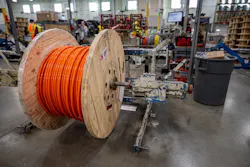
For example, ordering one big reel of cable can seem efficient from a material standpoint, but in reality it can lead to big delays. Pulling, measuring, cutting, stripping and labeling cables onsite takes valuable labor hours and requires staging space that modular environments typically don’t have. Instead, consider pre-kitting options where pre-measured assemblies allow installers to move directly into routing and termination.
This approach also helps to reduce the potential impact of poor terminations and loose connections, which can lead to electrical failures during commissioning. Reducing the amount of work required and variability in field can help mitigate these potential risks.
By focusing on the front end and understanding how single conductor cuts can be made for specific connections, organizations can save time on the back end and better manage overall labor requirements.
Additionally, it’s important to keep cable procurement top of mind. While modular data centers generally require less overall cable than their traditional counterparts, contractors are still competing with them for the same materials. Working with partners early in the process can help ensure that acquiring cable doesn’t become a bottleneck.
Right Size Your Labor Needs
Like any other project, labor planning is a critical factor in modular deployments. Traditional data center construction often requires large crews to work across expansive areas. By contrast, modular systems must be executed within tighter physical constraints and against even tighter time schedules.
To avoid slowdowns, get a clear understanding of your labor needs before you start. How many hours are needed to execute the job? Do you already have skilled laborers onsite? How much physical space is there in the data center and on the jobsite itself? If you opted for less cable prep, where and how can cutting and prepping take place? These considerations directly influence whether cable preparation should occur offsite, in a dedicated staging area or inside the module itself.
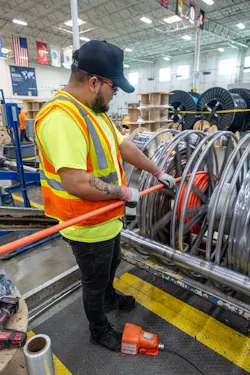
In this environment, the final preparation and installation of wire connections can require a particularly exacting level of detail. Conductors must be cut to precise lengths to avoid crowding inside distribution cabinets. Insulation must be stripped to manufacturer-specified dimensions to ensure proper lug engagement. Torque values must be applied consistently using calibrated tools, often documented for commissioning records. Phase identification, grounding continuity and cable routing must also comply with both electrical codes and manufacturer guidelines.
Right-sizing labor means matching crew size and skill level to these detailed specifications, and understanding when this specialized labor may be needed. Smaller, highly skilled teams may be a better fit than larger crews in modular environments, where precision matters more than volume. Efficient planning in this phase can help avoid bottlenecks during the final connection stage and ensure modules are ready quickly to meet deployment schedules.
Don’t Skimp on Product Quality
The pressure to standardize and reduce costs is ever present, but quality connections matter most for long-term reliability and performance. This is especially true in high-density AI environments as they generate significant thermal and electrical stress, making conductor integrity, insulation quality and termination components more important than ever.
According to Uptime Institute's Global Data Center Survey 2025, electrical power issues are the leading cause of data center outages. And while outage instances are down overall, even minor connection failures can lead to heat buildup, increased resistance and eventual equipment shutdown. In modular systems, where components are tightly integrated and harder to access, a poor-quality connection can affect an entire module.
Supply chain variability has also compounded this issue. Consistent cable sourcing has been a challenge as lead times for copper conductors, lugs and termination accessories have fluctuated, often prompting substitutions. But buyer beware. Make sure you engage with partners that can verify that alternative products meet the same specifications for ampacity, insulation rating and mechanical compatibility as the original component.
Working with a partner that understands the impact of these critical elements, can deliver consistent costing information for the right cables, and provides quality workarounds when delays occur is critical to delivering a ready and reliable modular data center.
Modular Data Centers are a Product not a Project
Perhaps the most important consideration to be aware of when it comes to modular data centers is recognizing that they are products rather than construction projects. Traditional data centers often take 12 to 24 months to build from design to build to operation. By contrast, modular data centers can be constructed, delivered and operational in a fraction of the time, ready to plug and play when they arrive onsite. While both may require customization, a modular data center is unique in that it is a product not a project.
Instead of designing infrastructure from scratch each time, modular deployments rely on repeatable configurations. Power feeds, interconnects and structured cabling pathways are predefined, allowing for predictable installation workflows. However, customization still plays a role. Each deployment may vary in capacity, redundancy level or site layout. Even small differences, such as module spacing or power distribution topology, can influence cable preparation requirements.
Because modular data centers are delivered as integrated systems, cabling becomes part of the final assembly process rather than a standalone construction phase. Installers are effectively completing the last step of product deployment. That means connections must be precise and testing must be thorough to ensure modules can be safely brought online without delays.
While data center construction is becoming mainstream, it is still a very specialized process. Modular data centers offer a compelling solution for organizations racing to support powerful AI computing requirements. But the speed depends heavily on structured cabling execution. Understanding the capacity needs and the cabling requirements for each individual instance can impact just how quickly these products can be delivered. By prioritizing procurement and cable preparation, right-sizing labor, maintaining product quality and treating modular deployments as repeatable products organizations can deliver faster, more reliable installations.