Overcoming a Labor Challenge: Smart Design Strategies to Simplify Cable Routing
Key Highlights
- The industry needs approximately 500,000 new workers by the end of the year to keep pace with rapid growth and AI-driven demands.
- Off-site preparation and quick-splice systems significantly reduce installation time, helping projects stay on schedule and avoid costly delays.
- Modern products are designed for ease of use, empowering less experienced installers and reducing the risk of errors during assembly.
- Prefabrication allows complex components to be built off-site, decreasing on-site labor, minimizing debris, and improving safety.
- Investing in prefabricated and quick-splice solutions can lead to around 30% cost savings, better airflow, and more predictable project timelines.
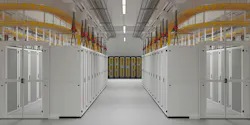
The data center industry is expanding at an extraordinary rate, but this growth faces a major hurdle. With nearly 92% of construction firms struggling to find qualified workers, the sector is trying to bridge a gap of approximately 500,000 new workers by the end of this year just to keep pace. Meeting this demand requires solving large-scale shifts, like the explosion of AI, while navigating the intense pressure to finish projects faster. Because a single month of delay can cost an operator over $14 million in lost revenue, the industry is looking for new ways to deliver capacity with smaller teams.
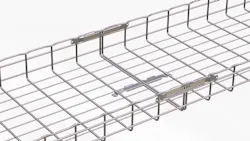
These needs are driving a major shift away from manual work on the job site and toward off-site preparation. One of the most effective ways to speed up installation is through the use of separate, snap-in splices. While traditional nut-and-bolt connections remain the most popular choice for their proven reliability and ease of inspection, quick install splices are changing the game. Some of these systems use a simple tool, often called a key, to snap and lock the splices into place. This allows sections of the tray to be joined securely in a fraction of the time, helping teams stay ahead of tight schedules.
By embracing offsite preparation and smarter splicing options, companies are discovering they can deliver higher-quality projects faster than ever before.
Supporting a New Generation of Installers
Many veteran installers are reaching retirement age, with experts projecting that 41% of the existing workforce will retire by 2031.3 This retirement wave means that a new generation is entering the trade — one that is tech-savvy but with less field experience.
To support them, modern product design is moving toward innovation-led simplicity. By creating cable trays and splicing systems that are easy to put together, manufacturers are empowering newer installers to be successful from day one. These products are engineered to be easy to understand, which removes the pressure of complex fabrication from the installer and makes project timelines much more predictable for the contractor.
Creating a Better Workday
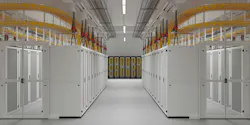
When designers plan for offsite preparation and quick-splices, they are doing more than just saving minutes: they are creating a more organized and safer workday for the crew.
Electrical contractors can create complex components like tees and crosses in a different location, such as a pre-fabrication shop. Once these pieces are constructed, they are moved to the site for final installation. This limits the amount of cutting needed inside the data center, helping to manage debris and allowing the team to focus on a smooth assembly rather than heavy manufacturing.
Safety and comfort are also prioritized. Manual tray modification typically requires workers to use heavy cutters to shape wire mesh, which can be a slow, loud and physically demanding process. Hand-bendable pathways enable workers to navigate turns and height changes without the need for heavy, loud power tools. This approach reduces physical strain that can contribute to injuries and because no cutting is required, the risk of sharp metal edges damaging expensive cables or causing cuts is eliminated.
The Benefit of Snap-in Quick Splices
The rise of artificial intelligence (AI) has fundamentally changed how data centers are built. Modern equipment racks now require an immense volume of power and data cables to handle AI workloads. In these crowded environments, cable trays must be organized perfectly to ensure that air can flow freely and keep the machines cool.
Snap-in quick splices provide a consistent, secure fit. They can connect in seconds, a fraction of the time required for traditional manual bonding. The audible click of a successful connection serves as a built-in quality check, removing the risk of human error associated with manual tightening and ensuring a reliable bond across the entire run.
The Power of Prefabricated Thinking
Prefabrication—building complex sections off-site—can reduce the time spent on-site by 40% to 60%. It allows for a parallel workflow, where the cable routing system is being manufactured at the same time the building’s foundation is being constructed. Intersections like T-junctions and crosses are traditionally the most time-consuming parts of a routing layout because they involve custom measurements and cuts. By fabricating these sections offsite and moving them to the site for installation, contractors keep the job site less crowded. This allows multiple teams to work more efficiently without getting in each other’s way.
The success of a prefab strategy depends on careful planning during the design phase. Teams identify which parts will benefit most from being moved to a secondary location for assembly. These can be assembled simultaneously while other parts of the building are being constructed or other materials are being installed. When combined with tool-less dropouts, which guide cables safely over the edge of the tray, they make the entire system easier to install, maintain and upgrade.
Investing in the Future
While ready-made products and off-site labor might cost more upfront, they can save a significant amount of money and time over the life of the project. A total cost analysis shows that these modern methods provide savings of approximately 30% compared to traditional ways of building. These savings are driven by three main factors.
- Material and Labor Savings: Pre-cutting parts off-site means there is less metal waste left on the job site floor. Because parts are moved into place already constructed, workers won’t need to spend as much time using heavy tools or the physical effort usually required to change the trays on-site.
- Energy Savings: Neatly organized trays help the air flow easily, which makes the cooling system work better. This simple improvement in airflow can save a large facility over $1.3 million a year in electricity costs.
- Schedule Certainty: Because they are built and tested in a factory, the risk of human error on the jobsite is much lower. This gives owners peace of mind that their data center project will stay close to the planned timeline. Parts are easy to move and change without special training, so the building is easier to upgrade as technology changes in the future.
While the labor shortage presents challenges in the industry, it has also become an opportunity for teams to prioritize smart design and high-efficiency hardware. With these advancements, companies can transform cable routing from a complex chore into a streamlined process that makes installation faster, easier, safer and more precise.
About the Author
 Amanda Tharp
Amanda Tharp
Senior Product Manager
Amanda Tharp is a senior product manager at Legrand, specializing in data-driven manufacturing strategies. She holds a degree in psychology from Truman State University and an MBA from Webster University, leveraging a strong background in marketing research to lead product innovation.