Why AI’s Appetite for Fiber Has Made DCIM a Strategic Imperative
Key Highlights
- AI workloads increase rack densities and connectivity complexity, requiring advanced cooling and cabling management beyond traditional methods.
- Power and grid access constraints make real-time visibility into energy consumption critical for avoiding capacity shortfalls and operational downtime.
- Connectivity density explosion demands integrated management tools to prevent cabling congestion, airflow disruption, and serviceability issues.
- Modern DCIM shifts from static documentation to real-time decision-making, enabling scenario modeling and predictive analytics for proactive management.
- Implementing a digital twin approach allows continuous reconciliation of physical and logical infrastructure, enhancing resilience and compliance.
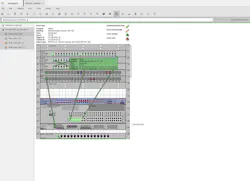
The rise of artificial intelligence isn't just another wave of IT demand. It's a structural shift in how data centers are built, operated, and scaled, and it's exposing the limits of the tools many operators still rely on. Manual processes, siloed systems, and static planning models that worked for predictable enterprise workloads are buckling under AI's compute intensity, energy demand, and connectivity density. In this environment, data center infrastructure management (DCIM) is no longer a back-office convenience. It's foundational; and the definition of what DCIM has to cover has widened along with it.
AI Has Broken the Old Operating Model
Traditional enterprise workloads were predictable: steady growth curves, rack densities within known thresholds, cooling and power evolving incrementally.
AI changes all of that.
Training and inference introduce extreme variability, and rack densities are climbing from a long-standing norm of 10–15 kW to 50–100 kW and beyond. NVIDIA's GB200 NVL72 systems are specified at roughly 120 kW per rack, with roadmap targets higher still. That's not a steeper curve; it's a step-function change in how infrastructure must perform.
Data centers have become what the industry now calls "AI factories." The cost of inefficiency, downtime, or miscalculation is no longer just operational. It is strategic.
The Forces Converging on Infrastructure Management
Operators used to be able to defer DCIM because the risk of running without it was contained. Four converging pressures have erased that margin.
- Power and grid access are now hard limits. Energy is no longer guaranteed on demand. In several major markets, grid connection has become the gating constraint on expansion. Average connection lead times in Amsterdam and Tokyo reached roughly 10 years in 2025, the Netherlands confines large new hyperscale builds to a handful of designated sites, and Singapore admits only highly efficient facilities through a competitive scheme. Even where blanket moratoriums are easing—Ireland lifted its Dublin grid-connection moratorium in December 2025, replacing it with on-site generation requirements—the underlying message is the same: power is scarce, conditional, and costly. Without precise visibility into power draw and available capacity, operators risk overcommitting resources, or being unable to scale when demand surges.
- Cooling has hit a physical wall. Air cooling is broadly viable to around 20-30 kW per rack; above that, fan energy and thermal constraints make it insufficient. AI densities have pushed liquid and hybrid cooling from optional to mandatory, and each approach adds manifolds, coolant distribution units, and leak-detection systems—new layers of interdependency that can't be managed safely without a unified view of the whole environment.
- Connectivity density has exploded, and it's where conventional tools are weakest. This is the pressure most easily overlooked, and for AI it may be the most consequential. AI training shifts network traffic from predictable north-south flows to dense, low-latency east-west communication between thousands of GPUs, driving leaf-spine fabrics and links at 400G and 800G. The cabling consequences are dramatic: AI data centers can require on the order of 10 times more fiber than conventional facilities, and a single GB200 NVL72 rack can demand roughly 864 fibers across its GPU, CPU, and storage fabrics. Pathways sized for 10G server cabling cannot absorb that density without redesign, and the operational risks scale with it. Pathway congestion, airflow disruption, and serviceability problems are now first-order concerns. At these speeds, a mislabeled trunk or an undocumented patch is not a tidiness issue; a single poorly terminated or misrouted fiber can degrade an entire training cluster. Yet connectivity is precisely the layer that facility-oriented DCIM tools tend to under-document.
- Complexity is outrunning the people managing it. A modern AI hall ties together millions of interdependent assets across power, cooling, compute, and network layers, while skilled-staff shortages persist. The gap between operational complexity and human capacity is widening, and spreadsheets and disconnected point tools cannot close it.
Individually, each pressure is significant. Together, they make operating without integrated infrastructure intelligence untenable.
Why DCIM — and Why Now
DCIM isn't new, but its role has fundamentally changed. Three shifts explain why this moment is different from earlier adoption cycles.
From system of record to real-time decision engine. DCIM was once a way to document assets and monitor performance for incremental optimization. AI workloads demand continuous adaptation: scenario modeling, "what-if" simulation, and predictive analytics that let operators anticipate change rather than react to it.
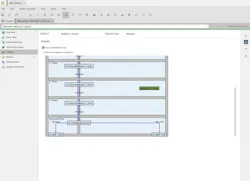
From efficiency story to risk and resilience. Lower energy costs and better utilization still matter, but the larger stakes today are avoiding downtime, preventing capacity shortfalls, and proving compliance and sustainability in an environment where regulators, customers, and investors all expect measurable transparency. Treating infrastructure as a live digital twin, continuously reconciled against reality, is what makes that achievable rather than aspirational.
This is the logic behind managing the data center as a digital twin: not a static drawing or a BIM model, but an operational representation that spans the facility, physical, logical, and service layers and stays current. It is also where a connectivity-strong platform such as FNT Command is built to close the gap that facility-centric DCIM leaves open.
What's at Stake
Operators that delay modernization face a compounding set of risks.
- Stranded capacity from poor planning and lack of visibility
- Service bottlenecks from under-provisioning or misaligned resources
- Escalating energy costs from inefficient utilization
- Compliance exposure in a tightening regulatory climate
- Lost competitive ground as more agile operators scale AI faster
The inverse is just as real. Operators that establish end-to-end visibility now can often reclaim capacity that already exists—inefficiencies in airflow, power distribution, and rack utilization can frequently be addressed without new capital investment—while positioning to scale deliberately rather than reactively.
From Reactive to Orchestrated
The path forward isn't simply more hardware or more square footage. It's a shift from fragmented, reactive operations to a coordinated model where infrastructure, including the connectivity fabric that AI depends on, is actively orchestrated rather than merely maintained.
In a world where the workload changes faster than the building can, that visibility is the difference between scaling AI and being constrained by it. DCIM, in its modern form, is what makes the difference.
About the Author

Oliver Lindner
Oliver Lindner has over 30 years of experience in IT and the management of IT infrastructures with a focus on data centers. He has worked for many years at FNT Software, a leading provider of integrated software solutions for IT management. In his current position as Director of Product Management, he is responsible for the strategic direction and continuous improvement of the software products for data centers. The aim is to support customers in the efficient and transparent design of their IT infrastructure.
Oliver attaches great importance to customer focus, innovation and quality. His expertise also includes the development and provision of Software as a Service (SaaS) solutions that offer customers maximum flexibility and efficiency. To this end, he works closely with his own team, partners and customers to create sustainable and innovative software solutions.
Voices of the Industry