FOA publishes fiber-optic network design guide
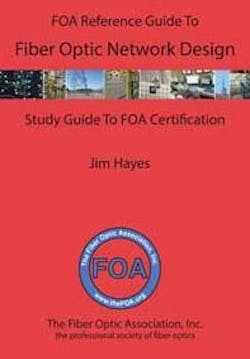
The Fiber Optic Association (FOA) recently published a textbook titled FOA Reference Guide To Fiber Optic Network Design. Authored by FOA president Jim Hayes focuses on the concepts of designing a fiber-optic network and how the entire process must be planned from idea through installation, operation and documentation.
“This book is aimed at network designers, contractors, supervisors as well as management personnel responsible for communications and IT departments, construction and facilities management. Anyone whose responsibilities include communications systems will benefit from the information in this book. It is also the textbook used for the FOA CFOS/D Fiber Optic Design Certification.
After the first, introductory chapter, the book includes the following.
- Chapter 2—Fiber-Optic Jargon
- Chapter 3—Standards and Codes
- Chapter 4—The Communications System
- Chapter 5—Cabling For The Application
- Chapter 6—Planning The Project
- Chapter 7—Project Documentation
- Chapter 8—Choosing Components
- Chapter 9—Power and Loss Budgets
- Chapter 10—Testing The Installed Network
- Chapter 11—Planning And Managing The Installation
Five appendices include additional references, definitions of terms, estimating, case studies, and application of standard project management processes in fiber-optic cable plant project management.
The 220-page book is available direct from the FOA eStore here, or as a paperback or Kindle version from Amazon here. It is also available through local booksellers and other distributors.