Fiber Cut Causes Air Traffic Control Outage, Leads to Finger-Pointing
Key Highlights
- A construction crew in New Jersey cut a fiber-optic cable while carrying out a railway project.
- The cable served as the backup line for the FAA's Philadelphia air traffic control center.
- The center's primary line was also offline, so the cut to the backup line brought the air traffic control system down and forced a ground stop at 5 major airports.
- With multiple stakeholders involved, including the FAA, Verizon, and NJ Transit, initial statements about the responsible party were later clarified.
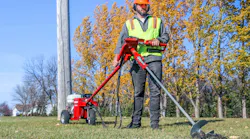
- The construction crew that cut the line said they were digging 10 feet away from the utility-location marking.
- Industry association The Common Ground Alliance said the incident is a reminder that the $83-billion-per-year problem of buried-utility damage should not be an afterthought.
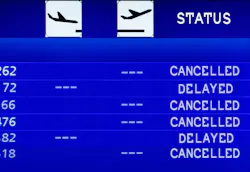
A few days after a cut fiber-optic line caused thousands of flight disruptions in the Northeast U.S., news reports indicate that the outage was the result of a series of mishaps. Unsurprising to professionals experienced in outside-plant cabling, trying to determine who was at fault for the cut initially resulted in finger-pointing. Unsurprising to those experienced observing the federal government, administrators of the agency affected by the cut say that more money is needed to prevent it from happening again.
Here is a chronological rundown of what happened.
- On Sunday, September 20, the Federal Aviation Administration (FAA) switched from the primary fiber-optic line supporting its Philadelphia-based air traffic control (ATC) facility to its backup line, after contractor L3 Harris informed the FAA it needed to troubleshoot the primary line.
- On Monday, September 21, a construction crew working for New Jersy Transit severed the FAA’s backup line while working on a railway project in New Brunswick, NJ.
- With the primary line down and being troubleshot, and the backup line severed, the Philadelphia-based ATC facility was completely offline, resulting in ground stops at Newark Liberty International Airport, Teterboro Airport, Philadelphia International Airport, John F. Kennedy International Airport, and LaGuardia Airport. Thousands of flights were either delayed or cancelled as a result.
The Fiber-Optic Cable Was Clear Cut; Responsibility Was Not
Confusion reigned early in the process, and proverbial fingers were pointed at entities that then defended themselves against culpability for the cut. Because the crew that cut the line was working on a railway project, Amtrak’s name was brought up initially. Transportation Secretary Sean Duffy wrote on social media, “An Amtrak construction crew accidentally cut into a fiber line in New Jersey which caused a telecom outage and forced FAA to pause flights in the Northeast.” Amtrak was then quoted as saying, “This incident occurred on New Jersey Transit property and involved a New Jersey Transit contractor.”
Verizon owns the severed line. On the day it was cut, Verizon issued the following statement, which was reported by the New York Daily News: “We have a fiber cable running adjacent to an Amtrak rail line in New Jersey. Construction contractors working in the area dug up and cut our cable. Verizon’s facilities were fully functional up to that point. Verizon bears no responsibility for this incident. We immediately deployed our technicians to the scene. We and our partners are actively working to repair the damaged cable and restore connectivity as quickly as possible.”
A spokesperson for New Jersey Transit told the New York Daily News its work crew had been “approximately 10 feet from the utility markings” when they severed the cable.
At approximately 6:00pm, Duffy said on social media the repair was complete.
Damage to Buried Utilities: An $83 Billion Problem
On Tuesday, September 22, the Common Ground Alliance (CGA) issued a statement about the incident. The CGA said, “Operations at airports across the Northeast were severely disrupted [September 21] after a backup communications system failed when a contractor severed a fiber-optic line in New Jersey, delaying more than 4000 flights, causing more than 500 flight cancellations and impacting hundreds of thousands of passengers across the country.
“Damage to telecommunications utilities—including fiber-optic lines—account for more than half of all reported buried utility damages, making them the single most frequently damaged category of buried infrastructure according to CGA data. Overall, damaged to buried utility lines cost the U.S. an estimated $83.2 billion each year.”
The CGA’s president and chief executive officer Sarah Magruder Lyle added, “This outage shows how quickly one cut fiber line can severely disrupt air travel across the country and impact daily life. More than 50 million miles of buried utility lines are the backbone of modern America, and when they’re damaged, the costs are measured not just in delays, but in safety risks and billions of dollars in losses. Preventing these strikes must be a national priority. These incidents are a stark reminder that infrastructure damage—whether to fiber, electric, natural gas, or water lines—cannot continue to be treated as an afterthought until a major incident occurs. It is an urgent public safety and economic issue that affects every American.”
FAA Stresses Need for Funding
The Hill’s Mira Bhakta reported on a September 23 press conference that Federal Aviation Administration administrator Bryan Bedford held. Bhakta quoted Bedford as saying, “We need to get rid of the old system. When it fails, we just don’t have the redundancy that we would get if we had a modern architecture.
“This is why we’re asking for a budget to replace all this of this stuff.”
Bhakta also quoted Transportation Secretary Duffy from social media, where he wrote, “This incident underscores the need for additional funding to modernize aging infrastructure and prevent disruptions like this in the future.”
To summarize: A fiber-optic cable owned by Verizon and serving as a backup line for the Federal Aviation Administration’s Philadelphia-based ATC center was severed by a construction crew working for New Jersey Transit. The backup line was in use at the time of the cut because the primary line was also down. The New Jersey Transit crew said they were digging 10 feet away from the marking that indicated where the fiber-optic cable supposedly was located. Verizon restored the line approximately 8 hours after the cut, allowing flight operations to resume at 5 airports.