5 Trends That Will Impact the ICT Industry in 2026

Like any industry, the cabling and larger information and communications technology (ICT) trade are subject to a number of drivers that influence its relative health, including growth or recession in a given time period. Technology evolution, macro and microeconomic conditions, and socioeconomic factors all affect the industry in which we work.
As 2025 winds down, professionals in the ICT industry can look back on, and possibly debate, the forces that had the most significant impact on the industry this year. Whether it was the new United States Presidential administration taking office, the continued growth of data centers that consume high volumes of cabling technologies, merger-and-acquisition activity among trusted suppliers, or any number of other goings-on, your work was never done in a vacuum.
That will continue to be the case in 2026, and every other year for that matter. This article discusses 5 trends that either have taken hold or have remained powerful this year, and are poised to hold strong influence over the ICT industry’s direction in 2026.

1. Government Actions
Despite the fact that voices, both supportive and critical, of any government entity probably sound louder today than they ever have, this author contends that A) such voices have always existed, we just weren’t always exposed to them quite as much as we are today; and B) actions and decisions by governmental bodies have always had a driving impact on industry. So I put this trend in the category “remains influential” rather than “recently became influential.” Professionals who have exposure to the Broadband Equity Access and Deployment (BEAD) program have witnessed the roller-coaster ride the program has been on since the Trump Administration took office in January 2025. Regardless of whether such changes bring comfort or pain, windfall or worry, they serve as reminders that government actions have significant sway over an industry’s future.
On a federal level, government actions can include (and have included) the creation of and modifications to BEAD, tariff policies, and the administration of the E-Rate program, to name only a few. On a state level, professional licensing requirements can have direct and significant implications for cabling contractors. When a state adopts an updated version of the National Electrical Code, enforcement implications can prompt changes of some type on jobsites. On a municipal level, giving the thumbs-up or thumbs-down to a significant construction project (think: data center) can bring economic activity into a locality, or send a developer 1000 miles away to pursue their Plan B.
As they really always have, government actions will play some role in how 2026 shapes up for our industry.
2. Skills
That’s an oversimplified, one-word title for a multidimensional set of dynamics affecting the ICT industry. The combination of skilled, experienced workers retiring at a rapid pace and a dearth of young, apprentice-level talent entering the industry is a fact of life across several trades, including cabling. So far I have not heard a “silver bullet” solution to this challenge, despite the fact that capable, intelligent, accomplished people are doing their best to address it. If we dare to consider the possibility that the skills gap, as it is called, does not close, what then? I believe 2026 is a year when the cabling and ICT industries will address that possibility in earnest.
If the labor pool has fundamentally changed, and the demand for skilled workers will outstrip supply for the foreseeable future, expect entrepreneurs to get creative in the realm of temporary staffing. Firms offering this type of service have existed—indeed they have succeeded and even thrived—for some time. But the dynamics are changing, and the challenges are getting larger. Gaining temporary access to an automobile includes such options as rental agencies (e.g. Avis, Hertz, etc.), car-share services (e.g. Zipcar), taxi services, along with Uber and Lyft rideshare services. Different options suit different user needs. How will the scenario shape up for employers who need temporary access to skilled workers? If the picture doesn’t begin to take shape in 2026, a year from now the skills gap will be wider and that much more difficult to bridge.
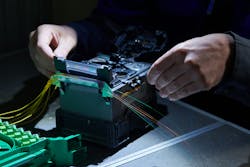
2026 also is likely to see a continuation of manufacturers’ efforts to release so-called “de-skilled” products, or products that do not require significant skill and experience to operate. This trend has been growing for a number of years, and the enterprise/premises cabling industry only needs to look as far as the outside-plant space to find numerous examples. From plug-and-play optical terminals, to fusion splicers that can be operated by relative novices, manufacturers of devices widely used in fiber-to-the-home deployments have invested significant research-and-development resources into offering products that less-skilled personnel can use successfully. The premises cabling space has contributed to this evolution as well, with tool-less jacks being one example. The relatively simple operation of highly sophisticated test equipment is another. We may or may not see many more examples of this type introduced in 2026, but it’s a safe bet that throughout the year, manufacturers will continue to work on simplifying some of their products with this objective in mind.

3. Hyperscalers’ Ripple Effects
We at Cabling Installation & Maintenance regularly cover the goings-on within hyperscale data centers, and it is evident that these facilities are having a seismic effect on several industries beyond cabling. Energy, real estate, finance—all are significantly affected by the economic force that is the hyperscale data center industry. Similarly, several construction trades are hyperfocused on the hyperscales, because of the massive volumes of product and labor required to construct them. And construction has been nonstop.
While the macro effects of hyperscale data centers is evident, we at CI&M have tried not to lose sight of their “micro” effects. That is, what impact do these hyperscales have on all the people who don’t work in them? On the enterprise-class and smaller data centers that don’t consume products and services at nearly the same rate? On the cabling technicians who may not have to handle such high-density cables and connections, but who have to overcome their own challenges nonetheless?
The dynamic reminds me of the Seinfeld episode, appropriate for this time of year, when Frank Costanza brought others in on his observation of “A Festivus for the Rest of Us.” Non-hyperscale data center facilities, and the workers who serve them, are like observers of Festivus who live in the shadow of the much-more-widely recognized and celebrated holidays.
So how does my lame attempt at humor have anything to do with 2026? In a few ways, hopefully. I foresee “the rest of us” benefiting from technology and economy-of-scale breakthroughs that the hyperscalers have forged. In at least one way, that already has happened. Several years ago, hyperscalers’ demand for long-wavelength transceivers drove producers of these transceivers to manufacture them in high volumes, achieving economies of scale that drove down the price of these photonics devices. However, I heard “airing of grievances” from industry professionals that these transceivers were available at such a price only to the hyperscalers, not to “the rest of us.” The typical enterprise data center was still looking at a high price tag for them. Eventually, the economy-of-scale benefit reached beyond just the hyperscalers, and users of all shapes and sizes gained access to lower-priced long-wavelength transceivers. As 2025 draws to a close, a fact of life for enterprise customers is they face longer lead times for products that also are in demand by hyperscalers. But my optimistic outlook is that 2026 will see an increase in manufacturing capability across the spectrum of cabling technologies. To what extent this increased manufacturing capability will shorten lead times, we will see. But make no mistake about it, demand from hyperscalers combined with the anticipated demand for American-made products for BEAD projects, has prompted these increases in manufacturing capacity. So at the same time we decry longer-than-desired lead times, let’s also acknowledge the forces that create them also are enabling their resolution.
A characteristic that hyperscales and Festivus have in common is “feats of strength.” In the Seinfeld episode, that meant a wrestling match with the head of the household. In hyperscales, it can mean a number of things, but I’ll focus on the sheer weight that equipment racks have to support in graphics processing unit (GPU) networks, which can be multiple tons. Moving these racks is such a feat of strength that some hyperscalers have turned to robots to achieve the task. Also, earlier this year, Meta introduced a double-width rack to handle the equipment demands of GPU networks.
In this case, how do the hyperscalers’ challenges affect “the rest of us”? Enterprise data centers can benefit from rack manufacturers’ product evolution roadmaps. While the double-wide rack is a special case for the elite few, data centers everywhere now have more options in rack and enclosure dimensions than they had a few years ago. Look for more rack and enclosure suppliers to offer amenities or accessories for needs including greater depth, cable management, airflow and more—most of which came about because hyperscalers’ demands necessitated them.
The Festivus pole is an undecorated aluminum pole that serves as a primary symbol of Festivus’s contrast to Christmas and that holiday’s lavishly decorated tree. That bare metal pole reminds me that any data center leveraging a bare metal server in 2026 should give a nod to the cloud service providers that instigated the creation of bare metal servers years ago.

4. Fault Managed Power
2026 is poised to be the year in which fault managed power (FMP) emerges as a technology widely offered by cabling and ICT contractors. Awareness of, and familiarity with, FMP technology has steadily built within the cabling industry over the past few years. The 2023 edition of the National Electrical Code recognizing FMP as its own power class (Class 4) “legitimized” it for many. Since then, professionals in the electrical trade as well as the communications cabling trade have had the opportunity to learn about the technology and its applications. FMP has been featured on the agendas of educational conferences and standalone seminars. FMP systems are available from manufacturers that cabling system designers, installers, and end-users have trusted for decades. An interest group, the Fault Managed Power Alliance, actively delivers education and promotes the implementation of this technology.
I expect 2026 to be an inflection year for FMP. The inventor of Digital Electricity, VoltServer, already offers a portfolio of FMP systems and will add to that portfolio in 2026. The National Electrical Contractors Association (NECA) and other electrician-focused educational institutions have been educating their members about FMP and how to deploy it for their customers. All signs point to FMP adoption rates growing in 2026 and beyond. The biggest question in my mind is who among the professional trades will design and install these systems. FMP presents a significant business opportunity for cabling contractors that include this technology in their portfolio of offerings.

5. Standards Development Activity
I commonly refer to cabling standards as the bedrock upon which many projects are built. Standards produced by such organizations as BICSI, the Telecommunications Industry Association, the International Organization for Standardization/International Electrotechnical Commission (ISO/IEC), the Fiber Optic Association and others, remain a guiding force in the specification, design, installation, and management of structured cabling systems. In this sense, standards-development activities by these groups will remain—rather than emerge—as significantly impactful goings-on in 2026. But a few of these activities in particular could have a practical impact on the day-to-day work of cabling and ICT professionals.
The TIA is working on a Telecommunications Systems Bulletin (TSB) that will address the deployment of twisted-pair copper cable at distances greater than 100 meters. The document ultimately produced from this effort will be TSB-5073. A TSB is not a standard per se, which means it does not include mandatory performance requirements. Rather, it includes recommendations and suggested practices. And in the case of TSB-5073, I’m told, it also will include specific cautions. When TSB-5073 is published—I’m crossing my fingers it will happen in 2026—I believe it will be widely viewed as the “official” do’s and don’ts of greater-than-100-meter copper links. Documents published by the TIA and others, even those that are not standards and do not have what are called normative requirements, nonetheless hold significant authority. I expect TSB-5073 to “set the table,” so to speak, for the deployment of twisted-pair cabling beyond 100 meters by legitimizing the concept.
Elsewhere, work being done within the Institute of Electrical and Electronics Engineers (IEEE) 802.3 Ethernet Working Group has the potential to provide more options to network designers within those hyperscale-style data centers mentioned earlier. A study group within 802.3 is developing options to support 200-Gbit/sec-per-fiber-pair transmission over multimode fiber. This complements the ongoing work in IEEE 802.3dj for 200G signaling over single mode fiber.
As a practical matter, this will mean supporting 800-Gbit/sec Ethernet over a single MPO-style connection with 8 multimode fibers. Initial expectations are for the architecture to support 30-meter transmission over OM4 fiber. The group may investigate alternatives that will support distances of up to 50 meters, potentially by using previously unused optical wavelengths and by defining new classes of multimode fiber. These reaches are perfectly suited for Scale-Out and Scale-Up AI networks. This exploration certainly will not result in new standardized specifications in the year 2026. But if this project indeed moves ahead within IEEE 802.3, it will enable those designing networks in the year ahead to plan for this capability in the years ahead.
These are just two of countless activities happening within the standards-development bodies that significantly impact cabling projects. Taken together, they are good examples of the long-term effects a standard (or a TSB) has on the professionals who use them. TSB-5073 will address a technology issue that has challenged cabling pros for years, finally delivering some practical steps for them to take. Meanwhile, the prospect of 800G over 8 multimode fibers puts an additional possibility on the horizon for network planners who are tasked with creating a technology roadmap covering several years.

5A. The ElephAInt in the Room
If you have read this far, first of all thank you. And second, I suspect that at some point in your reading you scoffed and asked, “Where is AI? How can you publish a list of trends that will impact the industry next year and not include artificial intelligence?” I am of two minds about AI and its impact on the cabling and ICT industries.
On one hand, I’ll compare AI to oxygen. It is omnipresent to the point of being taken for granted. While oxygen is the element that allows every human being to exist, nobody puts it on their list of healthy habits. Those lists include things like exercise, diet, sleep, and quitting vices, but not “breathe sufficient oxygen.” It’s essential but it’s assumed. In a similar way, in 2025 AI is everywhere. It is a driving force behind much of what is happening in hyperscale data centers. The skyrocketing demand for electricity from hyperscalers has given rise to the use of fault managed power in these facilities. AI is shaping a significant amount of the work taking place in standards-development organizations. As this article is being written, a political debate rages about whether or not states can regulate AI. Artificial intelligence is everywhere, permeating nearly every aspect of our industry and many others. In that sense, it is the oxygen that maybe should or maybe shouldn’t be on everyone’s list of healthy habits.
On the other hand, when I flip the lens and look at AI from the opposite standpoint—how AI applications will practically alter the daily activities of cabling and ICT professionals—I’m left searching for examples rather than providing them. We recently published an article with insightful commentary from CommScope’s Luc Adriaenssens about AI being the heretofore missing ingredient that will propel smart buildings to reach their potential. Luc’s vision for the application of AI is the most direct explanation I have heard for how you or your peers can use this technology to achieve business ends. Virtually every other discussion about AI focuses on how the cabling and ICT industries can build the infrastructure that is needed to support AI operations. If the question is, “What is AI doing for us?” the answer is, “Keeping us employed and prosperous.”
I don’t see AI solving the skills gap in 2026 or anytime soon. Influencers like Mike Rowe emphasize the notion that AI will take a lot of keyboard-and-mouse-oriented jobs from people, but it won’t be taking jobs from those in the construction trades. I find this argument persuasive, and I haven’t heard a counterargument disputing it.
Can AI help with some of those keyboard-and-mouse-oriented jobs that are within our industry, like estimating, CAD, or physical-network configuration? Optimistically I believe it can act as a helper in some cases, assisting but not replacing the people who do these jobs, and increasing their efficiency in the process. Some fusion splicers already incorporate AI, which has helped to drive down the skill and experience levels required of those who operate the splicers. So I would call AI’s impact on the cabling and ICT trades incremental, not transformational. Will it remain that way? Am I missing obvious examples of AI impacting your day-to-day work? I’d enjoy hearing your thoughts and your experiences in that regard.
About the Author
 Patrick McLaughlin
Patrick McLaughlin
Chief Editor
Patrick McLaughlin, content director for Cabling Installation & Maintenance and Endeavor B2B's Digital Infrastructure Group, has covered the cabling industry since the 1990s. He has authored hundreds of articles on technical and business topics related to the specification, design, installation, and management of information communications technology systems. McLaughlin has presented at live in-person and online events, has directed cablinginstall.com's webinar programs for 20 years, and administers the annual Cabling Innovators Awards.