Versatile 5 GHz-band, 90-degree sector panel antennas are dual polarized
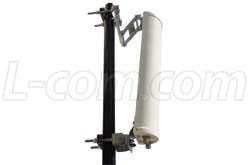
L-com has added a line of HyperLink-brand 90-degree sector panel antennas for the 5 GHz band that are dual polarized, offering high gain and wide bandwidth for IEEE 802.11a/n, 4.9 GHz Homeland Security, WiMAX and other applications. The HyperLink DP series antennas can operate in vertical as well as horizontal polarization, making them ideal for use with MIMO/802.11n multi-thread communication devices. The products feature heavy-duty UV-resistant plastic radomes for all-weather applications and come with stainless steel tilt-and-swivel mast mounting kits.
Related: Ultra-wideband antenna system supports current, future wireless networks
The HG4958-17DP-90 offers 17 dBi gain in the 4.9-5.8 GHz band, while the HG5158-19DP-90 offers 19 dBi gain in the 5.1-5.8 GHz band. List prices start at $100US to $170US respectively, and quantity discounts are available for larger orders. The new antennas are in stock and available for same-day shipment out of L-com's Boca Raton, FL, fulfillment center. Detailed 2D engineering drawings, 3D CAD models, and datasheets are available for free download from the company's website.
"L-com now has a complete line up of HyperLink high-gain dual polarized antennas that includes flat panels, parabolic dishes, and now sector panels," comments Patrick Pesa, director of product development for L-com.
More: The coexistence of wireless LANs and distributed antenna systems